Telling whether an Hermès bag is hand-stitched doesn’t require examining a dozen different spots. Just a few key checks will get you 90% of the way there. Hermès’ signature saddle stitch is something machines still cannot replicate — a 200-year-old technique born in the brand’s 1837 saddlery workshop. Here’s what you need to know.
✨ 1. Check the Stitch Angle — Slanted, Not Straight
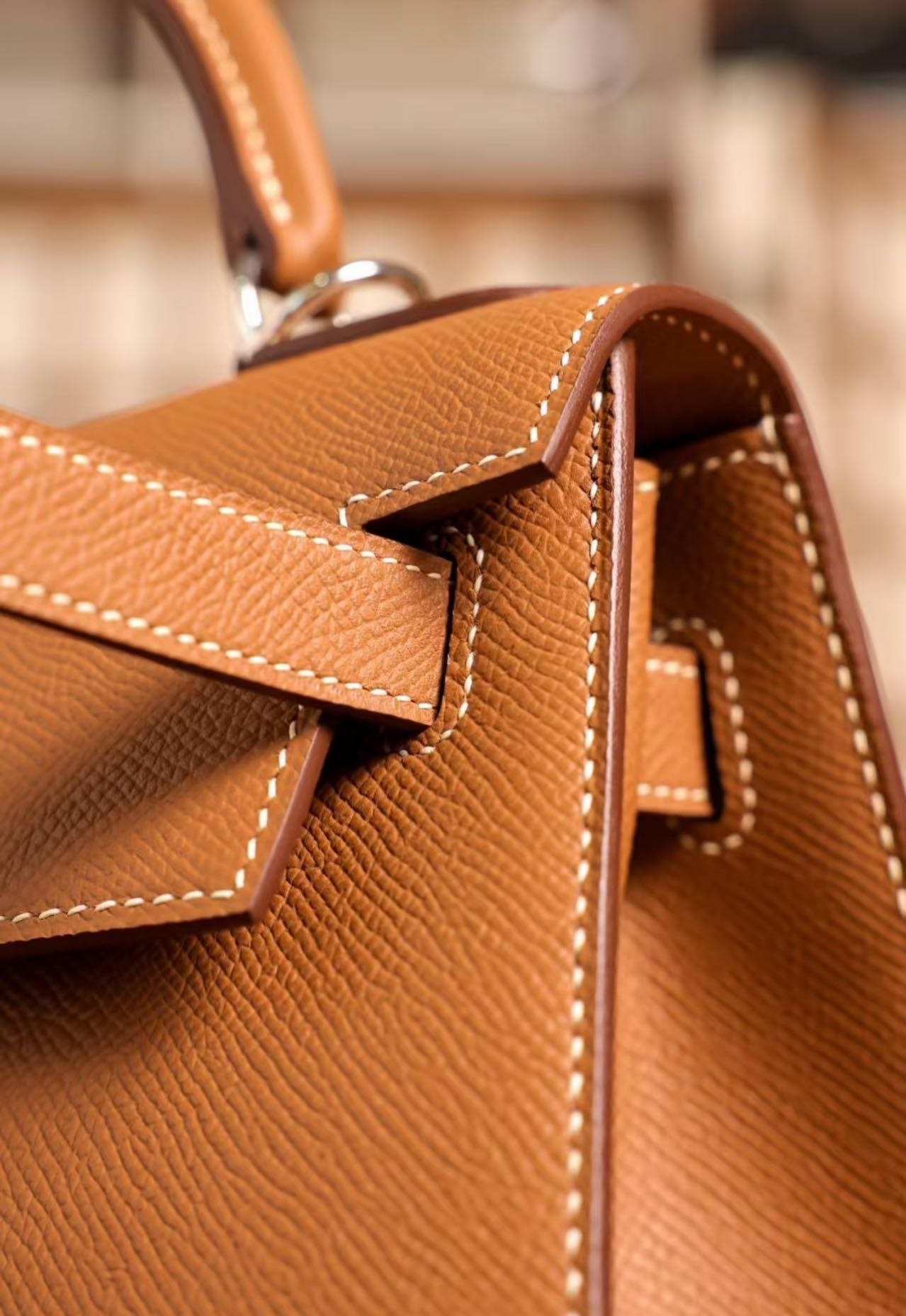
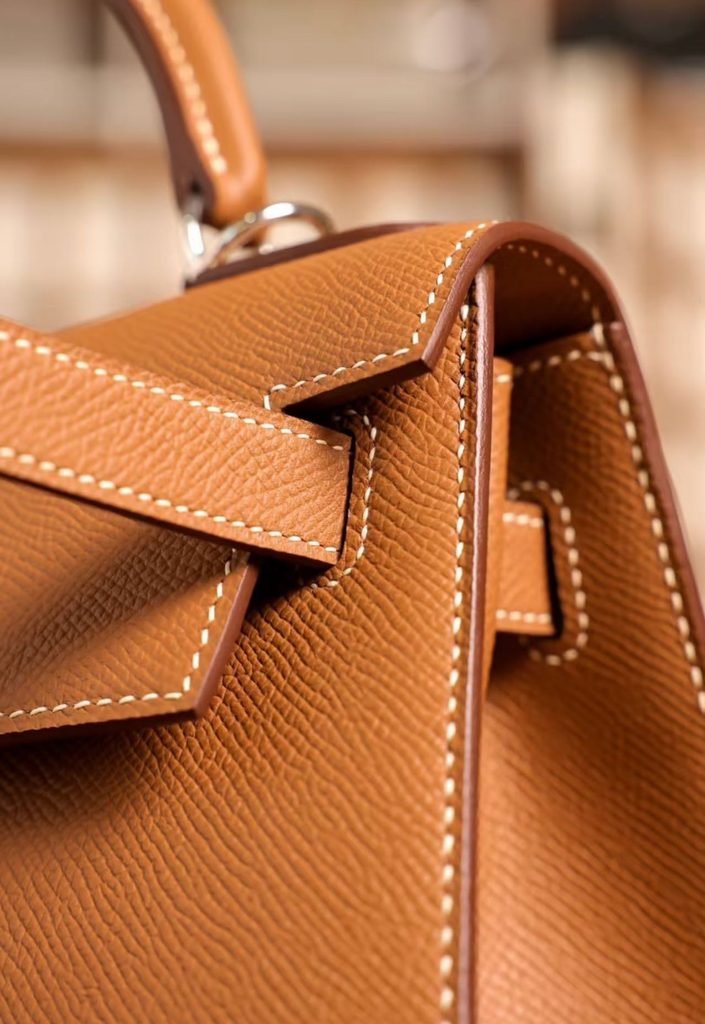
This is the most obvious indicator. The Hermès saddle stitch uses two needles and a single thread — both needles pass through the same hole from opposite sides. On an authentic Hermès bag, every stitch sits at an 18-degree angle. And here’s the key: the stitch direction on the front and back are mirror opposites. If the front shows a “/” slant, the back shows “” — reversed.
Machine stitching on low fakes? The front and back are either both straight or slant in the same direction. Even if the front looks decent, flip it over — that’s where they usually fail.
🔍 How to check: Turn the bag over and look at the stitching on the reverse side. Authentic Hermès shows mirrored slanted stitches; fakes show straight lines or same-direction angles.
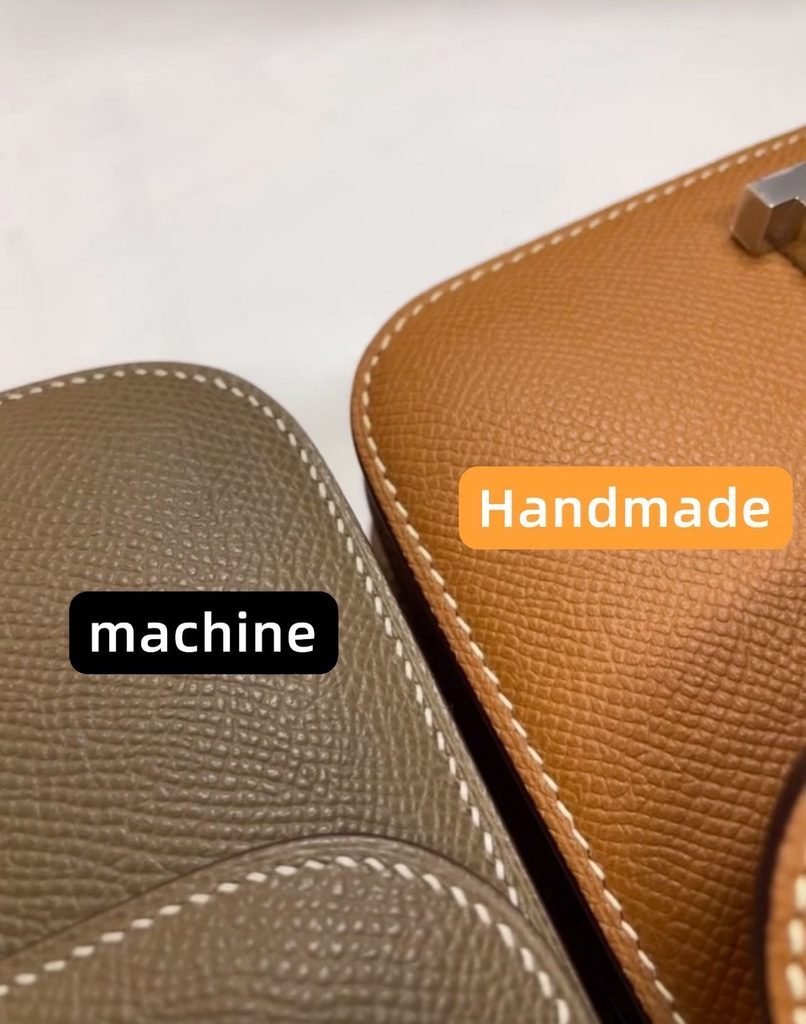
✨ 2. Feel the Thread Texture — Raised, Not Flush
Run your finger over the stitching — the difference is immediate.
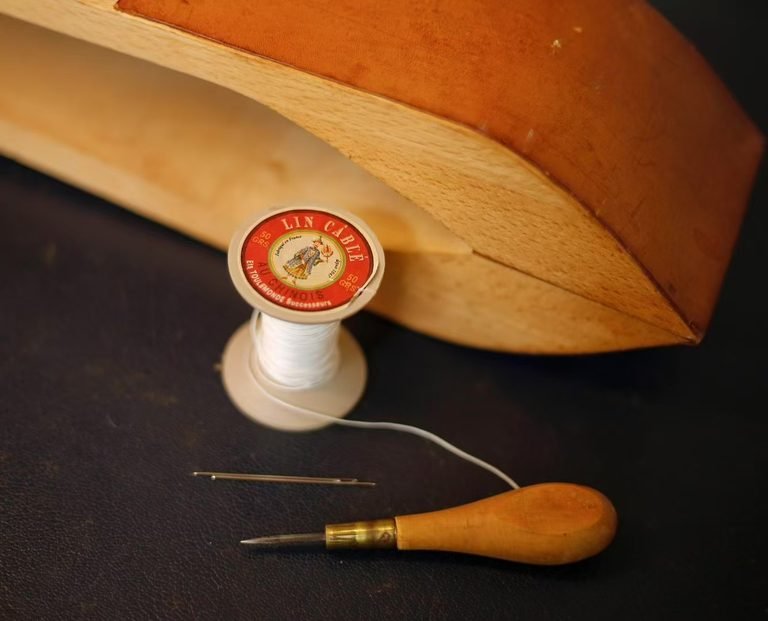
Hermès uses beeswax-coated linen thread, approximately 0.6mm to 1.2mm thick. The beeswax strengthens the thread, prevents fraying, and locks each stitch in place once pulled tight. Because each stitch is pulled by hand with slightly varying tension, the thread sits slightly raised above the leather surface — you can actually feel it.
Machine stitching lies completely flush, as if pressed into the leather. And fakes typically use nylon or polyester thread — smooth, shiny, and lacking the natural texture of linen.
🔍 How to check: Gently glide your fingertip across the stitching. Authentic stitches feel slightly raised with a waxy warmth; fakes feel flat and smooth with no dimension.
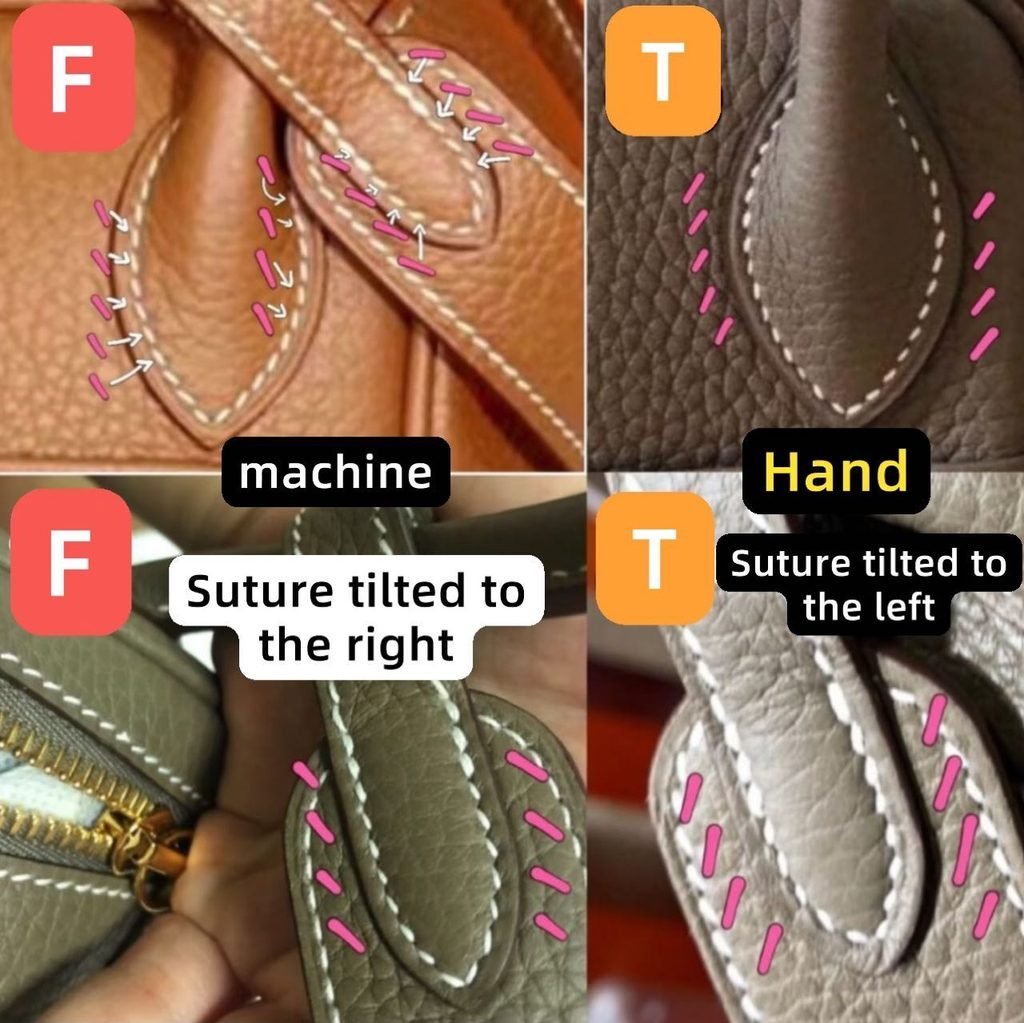
✨ 3. Inspect the Stress Points — The Joints Never Lie
Some low fakes may mimic the main panel stitching fairly well, but they almost always slip up at the connection points.
Pay close attention to:
Handle bases — authentic and RWI TOP uses the same saddle stitch here; low fakes often cut corners with machine stitching
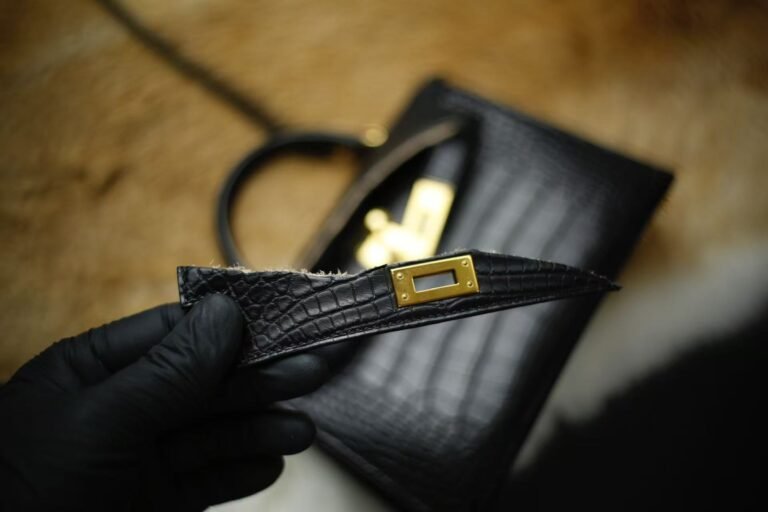
Clochette (the key holder) — authentic and RWI TOP stitching matches the bag exactly: same thread, same saddle stitch, same spacing
Bottom corners — authentic and RWI TOP tightens the stitch count at stress points for reinforcement; low fakes are often loose or sloppy
🔍 How to check: Flip over the handle bases, the clochette edges, and the bottom corners. RWI TOP maintains the same stitching standard everywhere;low fakes often take shortcuts in these “hidden” spots.
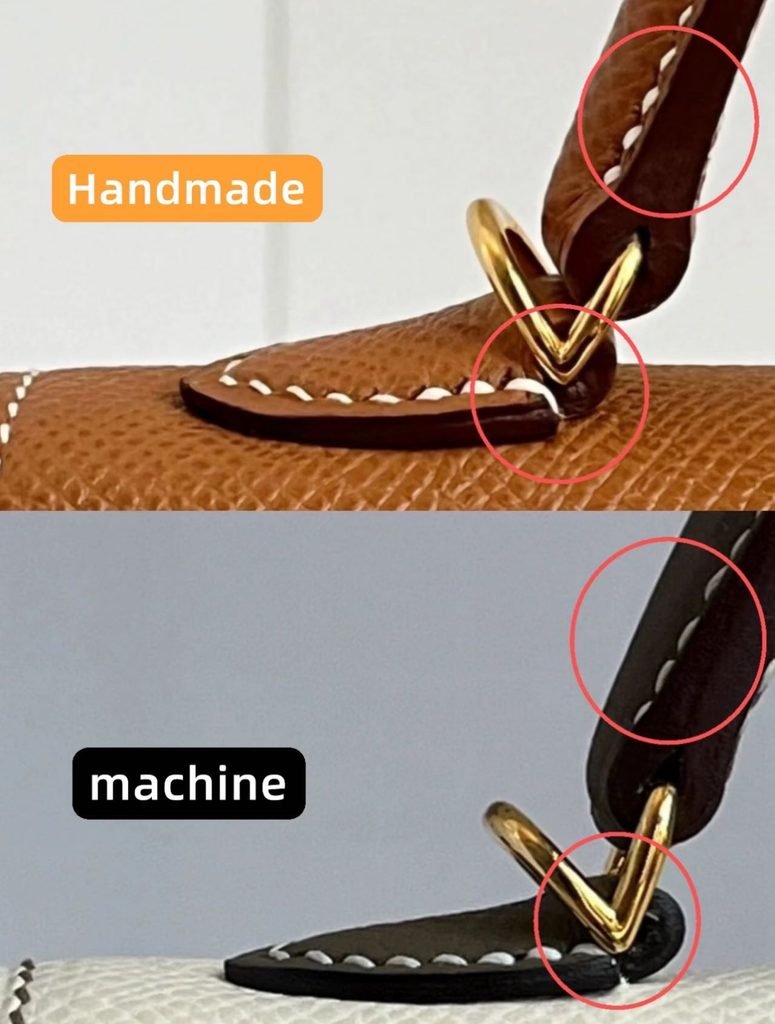
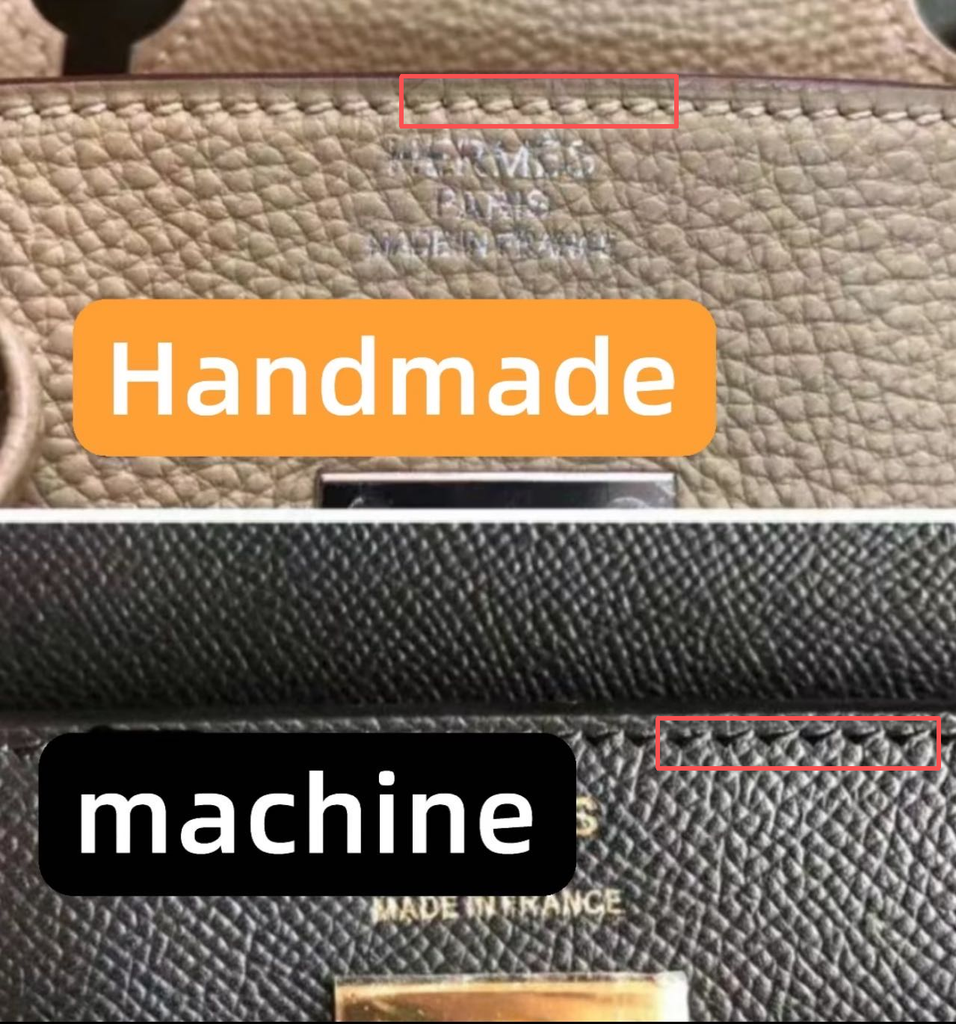
✨ 4. Examine the Stitch Holes — Too Perfect Is a Red Flag
Hermès stitching is neat, but it’s still handmade. Look closely and you’ll notice tiny natural variations in stitch depth and spacing — that’s the “human touch”.
What to look for:
Hole shape — Authentic uses a diamond-shaped awl, leaving square or diamond-shaped holes with clean edges. Fakes often have round holes with rough, frayed edges
Stitch consistency — Authentic spacing is stable but shows micro-variations (approximately 8-12 stitches per cm, depending on leather and model). Fakes are either too perfect (machine-uniform) or completely chaotic
Stress point reinforcement — At corners and handle bases, authentic stitches naturally tighten — the artisan’s instinct to reinforce
🔍 How to check: Use your phone’s macro lens to magnify the stitching. If it looks like it was drawn with a ruler, be suspicious — that’s a machine’s work, not a human hand.
📊 Quick 4-Step Checklist
| Checkpoint | Authentic (Saddle Stitch) | Fake (Machine Stitch) |
| Stitch Angle | ~18° slant, mirrored front/back | Straight or same direction |
| Thread Feel | Slightly raised, waxy warmth | Flush, smooth and shiny |
| Stress Points | Hand-stitched everywhere | Shortcuts at joints |
| Hole Shape | Diamond/square, clean edges | Round, rough edges |
📢 Final Words from RWI TOP
The Hermès saddle stitch cannot be replicated by machine. It takes an artisan two to four years of training to master. A single Kelly or Birkin requires approximately 680 hand stitches and 18 to 24 hours of work.
At RWI TOP, every single bag is hand-stitched using the same saddle stitch technique — two needles, one thread, beeswax-coated linen, and strict quality control on every stitch. Many sellers out there use machine stitching to cut costs — straight, lifeless stitches with no soul.
Our website may not have thousands of items yet, but every item we list is held to the highest standard — and every stitch will pass the magnifying glass test.
If you don’t see the style you want, simply send a screenshot to our customer support — we’ll source it globally and fight for the best version for you.
🌐 New official site: rwi.top (constantly updated)
📱 Customer service: always online for orders and after-sales
“Growing amid doubts, striving for every millimetre of perfection.”
— The RWI TOP Team